May 2, 2026 • Kevin Brooks • 9 min reading time • Prices verified June 25, 2026
Zero-Drop and Barefoot Shoes: The Honest Transition Guide for Plantar Fasciitis Sufferers
If you’ve ever woken up and taken that first step out of bed — the one where your heel screams at you before you’re even fully awake — you already know what plantar fasciitis feels like. It’s inflammation of the thick band of tissue running along the bottom of your foot (the plantar fascia), and it’s one of the most common reasons people start obsessing over footwear. Around the same time, you’ve probably stumbled onto the barefoot or zero-drop shoe movement, which promises a more “natural” foot position. Zero-drop simply means the heel and the ball of the foot sit at exactly the same height — no elevation under the heel at all. A traditional running shoe, by contrast, often has 8–12mm of extra cushion under the heel (called “heel drop”). The barefoot movement takes this further, favoring thin, flexible soles with no arch support, letting your foot move freely. Both sound compelling. Both also carry real risks for plantar fasciitis sufferers if you approach them wrong. This guide names the tradeoffs explicitly, shows you the transition math, and ends with a clear decision rule so you know which path is actually right for your situation.
Why Zero-Drop and Barefoot Shoes Are Even Part This Conversation
Here’s the core argument made by advocates of minimal footwear, summarized by Outside Online’s coverage of the barefoot running movement: conventional shoes with elevated heels shorten the Achilles tendon and calf complex over time. When the heel is perpetually raised, your calf muscles and Achilles adapt to that shortened position. Lower the heel suddenly, and all of that tension transfers directly to the plantar fascia — the very tissue that’s already inflamed.
The proposed solution sounds logical: gradually reduce heel elevation, let the posterior chain lengthen over time, and take load off the fascia long-term. Verywell Health’s overview of zero-drop footwear notes that proponents argue this restores more natural gait mechanics, strengthens intrinsic foot muscles (the small muscles inside the foot that most cushioned shoes effectively put to sleep), and distributes ground forces more evenly across the foot.
That’s the bull case. Here’s where it gets complicated for plantar fasciitis sufferers specifically.
The plantar fascia is under maximum tension when the Achilles is tight and the heel is loaded. Traditional elevated-heel shoes reduce Achilles tension at rest, which can actually reduce plantar fascia strain in the short term. This is why podiatrists routinely recommend a modest heel lift — sometimes just a simple orthotic — as an acute intervention. The American Physical Therapy Association’s clinical practice guideline on plantar fasciitis lists heel cushioning and arch support among the first-line conservative treatments, particularly in the acute phase (the first 6–12 weeks of symptoms).
So you’re looking at a genuine tradeoff, not a clear winner:
- Short-term: Elevated heel → less Achilles tension → less plantar fascia load → faster symptom relief
- Long-term: Zero-drop + strengthened posterior chain → better force distribution → potential reduction in recurrence
The question isn’t which philosophy is “right.” It’s where you are in the injury timeline.
The Transition Math: What the Timeline Actually Looks Like
This is where most guides get vague, and where people get hurt. Runners World’s coverage of zero-drop transition protocols is consistent on one point: the adaptation window is longer than almost everyone expects, and the consequences of rushing it are serious.
By the numbers:
| Phase | Duration | Weekly Mileage in Zero-Drop |
|---|---|---|
| Acute injury (active pain) | 0–12 weeks | Zero. Do not start here. |
| Resolved / managed symptoms | 12–24 weeks | Start at 10–15% of total |
| Adapted, pain-free | 6–12 months | Gradual increase to full use |
The Journal of Foot and Ankle Research, in studies examining how footwear affects plantar fascia loading, found that sudden transitions to minimal footwear significantly increased fascia strain in participants who hadn’t yet built adequate calf and intrinsic foot muscle strength. The risk isn’t the shoes themselves — it’s the mismatch between what your foot can currently handle and what the shoe demands of it.
If you’re in the acute phase right now — meaning you have active morning pain, stiffness after sitting, or pain that worsens through the day — this is not the time to experiment with zero-drop. Full stop. Get the inflammation under control first. A supportive shoe or a temporary orthotic isn’t a failure. It’s a precondition for eventually doing the transition safely.
Who Should Actually Transition (and Who Probably Shouldn’t)
This is the decision frame most people skip, and it’s the most important part of this guide.
You’re a reasonable candidate for zero-drop transition if:
- Your plantar fasciitis symptoms have been resolved or well-managed for at least 3–6 months
- You have no structural issues that require orthotic correction — flat feet, severe overpronation, or a significant leg-length discrepancy all change the calculus
- You’re willing to treat this as a 12-month project, not a product swap
- You can commit to a parallel strengthening program (calf raises, toe spreads, single-leg balance work)
- You currently spend significant time on your feet — standing desk workers, runners, and hikers who log consistent volume tend to adapt better because the foot strengthening happens organically
You should be very cautious or avoid this path if:
- You’re post-surgical (post-plantar fascia release, Achilles repair, or any foot/ankle procedure in the past 12 months)
- You have diabetic neuropathy — reduced sensation means you lose the feedback loop that tells you when you’re overloading tissue
- You have a history of Achilles tendinopathy alongside your plantar fasciitis (a common pairing — Healthline’s overview of plantar fasciitis notes that tight calves are a primary risk factor for both conditions simultaneously)
- You’re over 60 with significantly reduced ankle dorsiflexion (the ability to flex your foot toward your shin)
- Your symptoms are bilateral and severe — two affected feet means twice the transition risk
If you’re buying for someone else: If you’re shopping for an elderly parent or a post-surgical patient, zero-drop and barefoot shoes are almost certainly the wrong category right now. Extra-depth orthopedic shoes with removable footbeds — brands like Drew Shoe or Finn Comfort — are built specifically for people who need structural support, and they don’t require a transition period. The $300–$450 price point in that category is often podiatrist-informed and worth every cent for someone in chronic pain. That’s a different article, but worth saying plainly.
The Honest Product Landscape: What to Look For (and What Owners Report)
If you’ve cleared the candidacy check above and you’re ready to start exploring, here’s how to think about the categories.
True barefoot shoes (Vivobarefoot, Xero Shoes) have near-zero stack height — meaning the total sole thickness between your foot and the ground is 3–8mm — and zero heel drop. Owners consistently report that these feel revelatory for foot strength over time, but the learning curve is steep and the early weeks involve genuine soreness as foot muscles wake up. These are the highest-reward, highest-risk option for plantar fasciitis sufferers.
Zero-drop with cushion (Altra Torin, Altra Paradigm) keep the level heel-to-toe geometry but add significant stack height for cushioning. This is the most sensible entry point for someone coming from conventional footwear with a plantar fasciitis history. Altra in particular has built its entire brand around this hybrid — you get the biomechanical alignment benefit without the shock transmission of a truly minimal sole. Reviewers at Runners World consistently rate the Altra Torin as one of the most approachable zero-drop options for runners transitioning from traditional trainers.
Low-drop transitional shoes (4–6mm drop) — this is actually where many podiatrists suggest starting. Shoes like the Hoka Clifton or Brooks Glycerin in a lower-drop configuration let you begin reducing heel elevation without jumping straight to zero. The Hoka Bondi’s generous cushioning at a moderate drop has made it a favorite among plantar fasciitis sufferers who want some decrement in elevation without the full commitment.
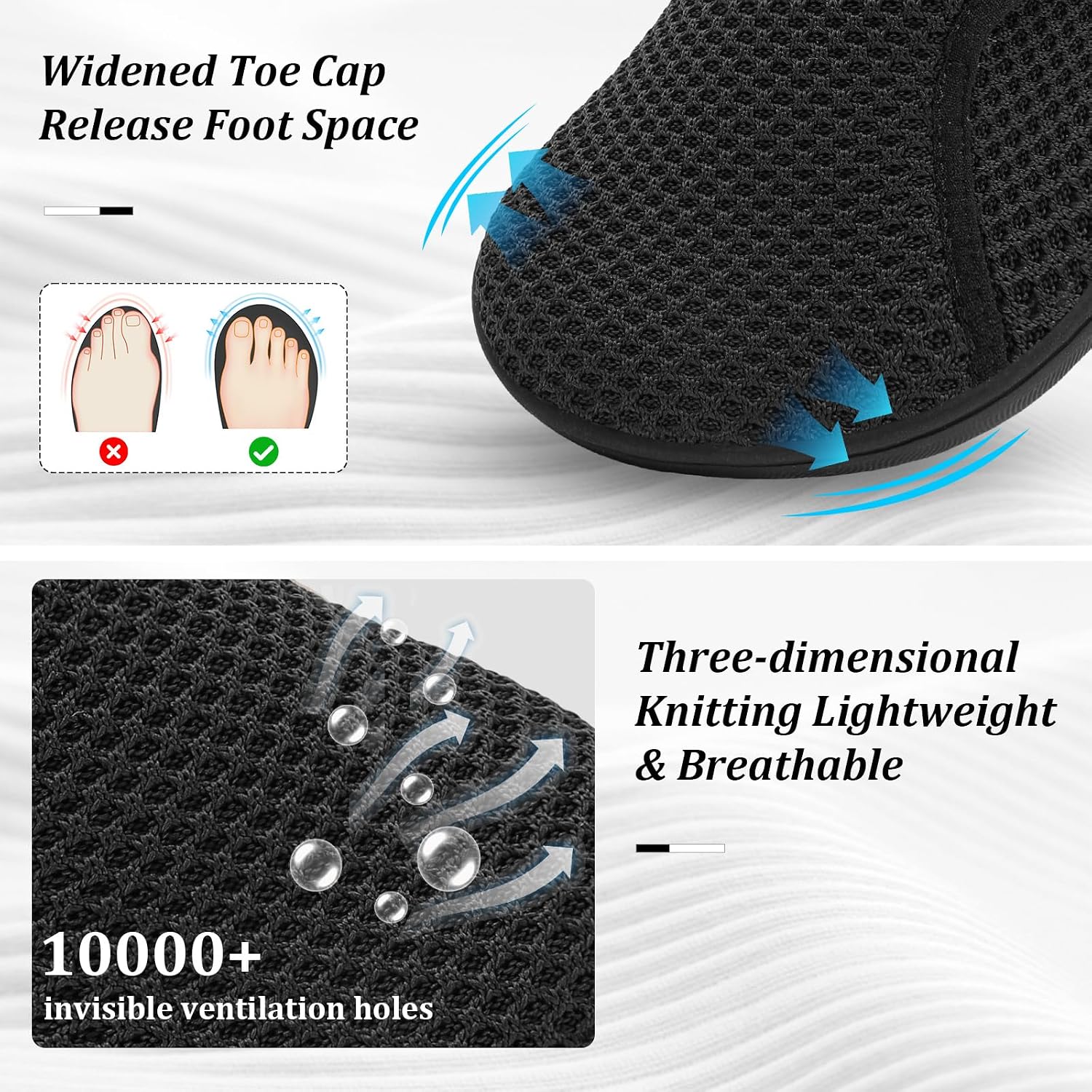
Width matters enormously here. One consistent finding across reviews of minimal and zero-drop shoes: a wide toe box is non-negotiable. Barefoot shoes are specifically designed to let toes splay naturally under load, which is part of the strengthening mechanism. If your toe box is cramped, you lose most of the benefit. If you’re between widths, size up. Verywell Health’s footwear guidance specifically flags toe box width as a key variable in plantar fascia load distribution.
A Practical Transition Protocol (Based on Published Guidance)
If you’re cleared to start, here’s a conservative framework consistent with what physical therapists and sports medicine practitioners recommend in published protocols:
Months 1–2: Wear your zero-drop shoes for short, low-intensity sessions only — 20–30 minutes of walking, not running. Keep your regular footwear for everything else. Do daily calf stretches (standing and seated) and towel-scrunching exercises to activate intrinsic foot muscles.
Months 3–4: If you’ve had zero symptoms, expand to 40–50% of your walking volume in zero-drop. Add single-leg calf raises (both straight-leg and bent-knee, targeting both the gastrocnemius and soleus). Begin short barefoot sessions on grass or carpet to build ground-feel.
Months 5–6+: Gradually increase volume. If you’re a runner, the 10% rule applies strictly — never increase your zero-drop mileage by more than 10% week over week. Watch for the return of morning stiffness; that’s your early warning signal to back off.
The American Physical Therapy Association’s clinical guidelines on plantar fasciitis emphasize that any exercise-based intervention — including footwear transitions — should be accompanied by targeted stretching of the plantar fascia and Achilles complex. This isn’t optional if you’re managing a history of this condition.
The Decision Rule
Here’s the “if X, then Y” frame to take away:
If your plantar fasciitis is acute or active → don’t transition yet. Get supportive footwear, possibly a temporary orthotic, and let the tissue calm down. Revisit this conversation in 3–6 months.
If you’re pain-free but cautious and want a long-term biomechanical reset → start with zero-drop plus cushion (Altra’s lineup is the clearest starting point), commit to the 6–12 month timeline, and treat foot strengthening as non-negotiable homework.
If you have structural complexity — neuropathy, post-surgical status, severe flatfoot, bilateral symptoms → skip this category entirely and invest in properly fitted orthopedic footwear instead. The barefoot movement’s benefits are real, but they assume a foot that can safely take on increased demand. Not every foot can.
If you’re a generally healthy runner or active adult who had one plantar fasciitis episode that’s now resolved → you’re the ideal candidate. The long-term case for zero-drop is strongest for you, and the transition is most likely to go smoothly if you’re patient about it.
The honest truth is that zero-drop and barefoot shoes aren’t a treatment for plantar fasciitis. They’re a potential path toward a foot that’s more resilient and less likely to develop it again — but only if the timing is right and the transition is earned. Don’t rush the timeline. Your fascia will tell you if you did.