June 22, 2026 • Kevin Brooks • 9 min reading time • Prices verified June 25, 2026
Brooks, Skechers, and New Balance Walking Shoes: Heel Drop, Cushion, and Who Each Brand Is Really For
If you’ve stood in front of a shoe wall — or scrolled through page after page online — and wondered why Brooks, Skechers, and New Balance all claim to make “the best walking shoe,” you’re not alone. Each brand makes a reasonable case. But they’re not building shoes for the same person, the same foot, or the same kind of day. Heel drop (the height difference between the heel and the ball of the foot — a higher number tips your weight forward, a lower number keeps you flatter and more natural) and stack height (the total thickness of foam beneath your foot — more stack means more cushioning, more distance from the ground) are the two numbers that separate these brands more than any marketing claim. Once you understand how those specs map to your body and your daily routine, the right choice gets a lot clearer. This guide breaks down where each brand excels, where it cuts corners, and — most importantly — who should actually be walking in it.
How the Three Brands Think About Cushion (And Why It Matters More Than the Logo)
Here’s the honest framing: Brooks is an athletic-performance brand that adapted its running technology for walkers. New Balance is a heritage width-and-fit brand that takes medical and orthopedic compatibility seriously. Skechers is a comfort-first brand that figured out how to deliver a genuinely soft underfoot experience at a price point the other two can’t match.
None of that is a knock. It’s just the lens you need.
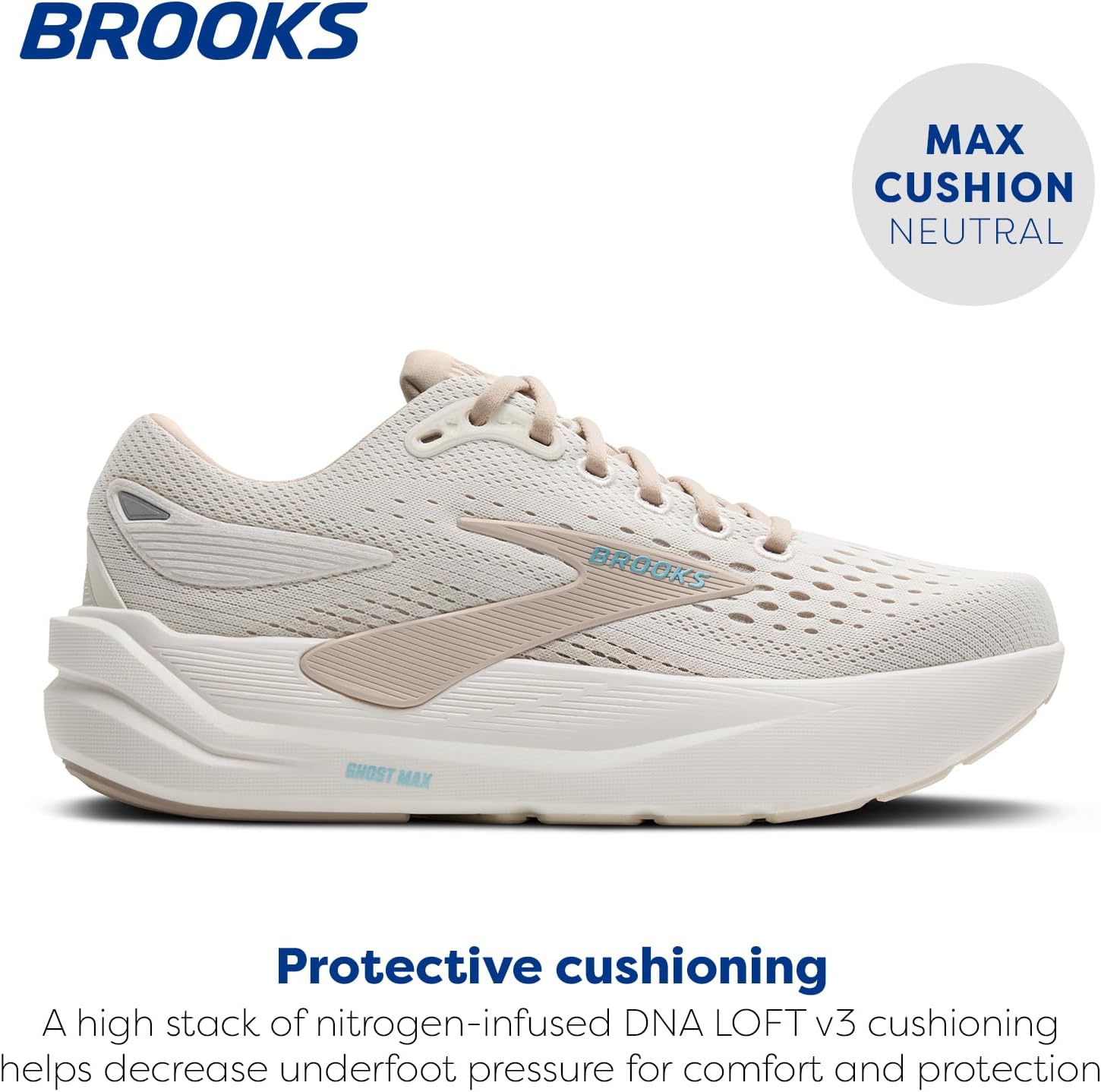
Brooks leans on its DNA Loft and DNA AMP foam compounds — proprietary cushioning technologies designed to absorb impact at higher energy returns than standard EVA foam. For walkers, this translates to a shoe that rewards a longer, more purposeful stride. Published specs across the Ghost and Adrenaline GTS lines put heel drop at 12mm, which is on the higher end of the walking-shoe spectrum. That geometry is deliberate: it reduces strain on the Achilles tendon and calf, which is exactly what you want if you’re coming off a period of reduced activity, managing plantar fasciitis (the stubborn heel-pain condition caused by inflammation of the thick band of tissue connecting your heel bone to your toes), or simply walking at a pace that keeps your heel striking first. Verywell Health’s walking shoe editorial review consistently calls out the Adrenaline GTS as a top pick for overpronators — people whose arches tend to roll inward — because of its GuideRails support system, which limits excess lateral movement without forcing your foot into a rigid corrective position.
New Balance plays a different game. The brand’s 928 and 990 series, along with the ABZORB-cushioned 847, are built on extra-depth lasts (the internal 3D mold that determines a shoe’s shape) — meaning they accommodate custom orthotics and prescription insoles without squeezing the toes or collapsing the arch. This is not a minor detail. Consumer Reports’ walking shoe buying guide specifically flags last compatibility as one of the most overlooked factors in therapeutic footwear, particularly for wearers managing diabetic neuropathy or post-surgical swelling. New Balance also offers more width options — 2E, 4E, and in some models 6E — than either Brooks or Skechers at equivalent price points. Heel drop across the therapeutic walking line ranges from 8–12mm, with most models sitting near 10mm. That middle-ground geometry is intentional: it’s accommodating without being aggressively minimal.
Skechers Max Cushioning and GOrun lines deliver stack heights that rival or exceed both brands at roughly half the price. Published specs on the Max Cushioning Elite 2 put total stack at around 38mm — comparable to Hoka territory — with a heel drop of approximately 8mm. The responsive Hyper Burst foam is lighter than it has any right to be at that volume. What Skechers trades away is precision fit engineering. Width options are limited (mostly medium, with select wide fittings), arch support is moderate rather than structured, and the upper materials are less breathable than Brooks or New Balance equivalents in the $120–$160 range. Across aggregated reviews on platforms tracked by Outside Online’s walking shoe gear guide, Skechers scores highest for all-day comfort on flat terrain and lowest for stability during lateral movement or on uneven surfaces.
The Spec Comparison You Actually Need
By the numbers — midrange flagship walkers (2025–2026 published specs):
| Brand / Model | Heel Drop | Stack Height (heel) | Starting Price | Width Range |
|---|---|---|---|---|
| Brooks Adrenaline GTS 24 | 12mm | ~29mm | ~$140 | B, D, 2E |
| New Balance 928v3 | 10mm | ~28mm | ~$160 | B, D, 2E, 4E |
| Skechers Max Cushioning Elite 2 | 8mm | ~38mm | ~$85 | M, W |
That price gap between Skechers and New Balance isn’t a quality gap across the board — it’s a fit-engineering gap. If you’re buying for a standard-width foot with no orthotic needs, Skechers delivers genuine value. If you need a 4E last and room for a custom insert, Skechers simply doesn’t have the infrastructure.
Who Each Brand Is Actually Built For
Brooks is for the active walker who thinks like an athlete. If you’re logging 8,000–12,000 steps a day, training for a walking half-marathon, or transitioning from running to lower-impact exercise after an injury, Brooks’ performance foam and GuideRails system give you the support architecture to sustain that load. Runner’s World’s Brooks gear review notes that the Adrenaline GTS consistently draws praise from wearers who describe themselves as “in between” running and walking — people who want athletic responsiveness without the pounding of a high-stack maximalist shoe. The 12mm heel drop is worth flagging: if you’ve been wearing minimal or zero-drop footwear and you step into a Brooks GTS cold, your calves may feel it the first week. That’s not a defect — it’s geometry your body needs time to adapt to. Plan for a two-week break-in on any significant heel-drop change, per Mayo Clinic’s guidance on gradual footwear transitions for plantar fasciitis management.
New Balance is for anyone whose feet don’t fit the industry default. The brand’s commitment to multiple width options and extra-depth construction is genuinely rare at the $130–$200 price point. Podiatry Today’s coverage of diabetic footwear standards repeatedly cites extra-depth last construction as a non-negotiable for neuropathy patients, because even minor pressure points compound into serious tissue damage over time. New Balance’s 928 and Nexus lines are APMA (American Podiatric Medical Association) Seal of Acceptance holders, which means they’ve been reviewed for foot health suitability — not a clinical endorsement, but a credible signal that the construction meets a professional threshold. If you’re buying for an elderly parent, a post-surgical patient, or someone whose podiatrist has recommended a specific width or insole, New Balance is the default starting point, not a fallback.
Skechers is for the value-driven walker who prioritizes all-day softness and isn’t managing a clinical condition. Standing-desk professionals, light-to-moderate walkers, and gift-buyers looking for a comfortable everyday shoe without a $150+ price tag will find Skechers genuinely hard to beat on the feel-per-dollar metric. The Max Cushioning line in particular draws consistent praise in aggregated walking shoe reviews tracked by Verywell Health for reducing fatigue on hard floors — retail workers, teachers, and hospital staff mention it repeatedly. Just be honest about the trade-off: if the person you’re buying for has pronation issues, a bunion, or any structural foot concern that requires precise fit, Skechers’ limited width range and moderate arch support will eventually let them down.
Return Policies and Width Compatibility: The Friction You Need to Know Before You Buy
This is the part most buying guides skip, and it’s where people get burned.
Brooks offers a 90-day wear trial through its direct website — you can walk in the shoes and return them if they don’t work for your gait. That policy is a meaningful safety net given the 12mm heel drop, which genuinely needs trial time. Through third-party retailers, standard return windows (typically 30 days unworn) apply, so buy direct if you’re not certain.
New Balance’s return window on direct purchases is 45 days with wear. More importantly, their fit team at NB specialty retail locations can measure your foot in multiple widths and compare last shapes before you commit — a service that’s worth seeking out if you’re in the orthopedic or therapeutic tier.
Skechers offers 45-day returns on direct purchases. Given the lower price point, the risk of a miss is lower, but the limited width range means if you’re a wide-foot buyer, confirm the specific model comes in your width before ordering. Not all Skechers “wide” options are true wide-last construction — some are simply wider in the upper fabric with the same underlying mold, which doesn’t solve the problem.
If you’re buying for someone else: New Balance is the safest gift choice for anyone with a known foot condition, extra-wide feet, or an existing orthotic. Brooks is the right call for the active walker who has already been wearing supportive athletic shoes and wants an upgrade. Skechers is a reliable everyday-comfort gift for someone without clinical needs — and leaves budget room to add a quality aftermarket insole if needed.
The Decision Rule
If you’ve gotten this far, here’s the honest if-then:
If your priority is athletic performance, you have a standard or slightly wide foot, and you’re walking 7,000+ steps daily — Brooks Adrenaline GTS or Ghost is the move. The foam technology justifies the price, and the 90-day trial removes the risk.
If you need extra-depth construction, multiple width options, orthotic compatibility, or a podiatrist-friendly last — New Balance 928 or 847 series is where you start. The price premium over Skechers is smaller than you think once you factor in the fit engineering and APMA credibility.
If you want maximum softness at minimum cost, have a standard-width foot, and aren’t managing a structural condition — Skechers Max Cushioning delivers. Spend the savings on a quality aftermarket insole (a $30–$50 Superfeet or Powerstep insert does real work inside a Skechers platform) and you’ve built a more personalized setup than either Brooks or New Balance offers out of the box.
The brand wars matter less than your foot’s actual geometry. Get the width right, match the heel drop to your activity level, and confirm the return policy before you commit. Those three things will do more for your comfort than any logo on the heel.