April 26, 2026 • Kevin Brooks • 9 min reading time • Prices verified June 25, 2026
Orthofeet vs. FitVille: Is the $120–$155 Orthopedic Shoe Worth It Over a $45 Alternative?
If you’ve ever searched “orthopedic shoes” and felt your eyes glaze over at the price gap — $45 on one tab, $150 on another, and no obvious explanation for why — you’re in the right place. “Orthopedic shoe” isn’t a regulated term; it loosely means footwear engineered to support the arch (the curved underside of your foot), cushion the heel, and accommodate the kind of foot shapes that standard shoes ignore — wide toes, high arches, bunions (a bony bump at the base of the big toe), or diabetic neuropathy (nerve damage that makes the feet extra vulnerable to pressure sores). Two brands that come up constantly in this category are Orthofeet, which sits in the $120–$155 range, and FitVille, which competes around $40–$55. The question isn’t which one is cheaper. The question is whether the more expensive one is worth it for your specific situation — and that answer isn’t universal.
What You’re Actually Paying For: Breaking Down the Construction Gap
Let’s name the tradeoffs plainly, because this is where most buyers make a mistake in either direction.
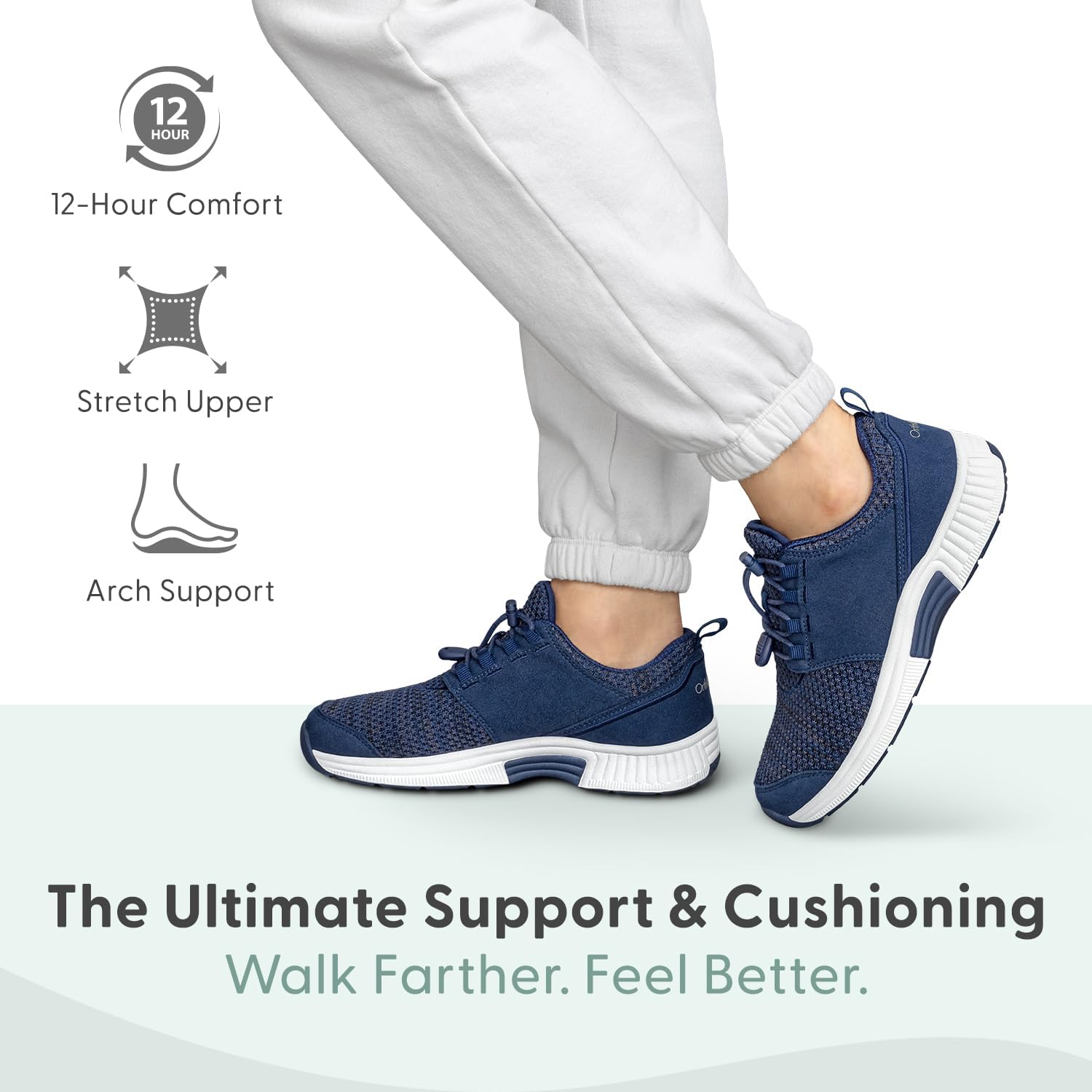
Orthofeet’s engineering stack is built around a few proprietary systems: an anatomical orthotic insole (a removable, contoured footbed — think of it as a built-in arch support you’d normally buy separately for $30–$60), a wide and extra-depth last (a “last” is the mold the shoe is built on — extra-depth means there’s more vertical space inside the shoe to accommodate orthotics or swollen feet), and an Ergonomic-Stride sole designed to soften the moment your heel hits the ground. Across Orthofeet’s walking and sneaker lines, published specs show a notably cushioned forefoot platform and a rocker-style outsole on select models — meaning the sole curves slightly at the toe to reduce the bending stress on arthritic joints.
FitVille competes by offering wide-toe-box construction, a dual-density EVA midsole (EVA is a lightweight foam; dual-density means the heel is firmer than the forefoot, mimicking basic motion control), and removable insoles that accept custom orthotics. At $45–$55, the material spec is honest mid-tier: functional, but not built to the same tolerance.
Here’s where buyers make the call wrong: they assume the $100 premium is pure brand markup. It isn’t — but neither is it entirely construction. You’re also paying for Orthofeet’s customer service infrastructure, their 60-day wear-and-return policy, and their clinical fit advisory resources. For a buyer who knows their needs, that overhead matters less. For a buyer who’s still figuring out whether an extra-wide or a 4E width is right for them, it matters a lot.
By the Numbers
| Factor | Orthofeet | FitVille |
|---|---|---|
| Price range (2026) | $120–$155 | $40–$55 |
| Width options | Medium through 4E/XXW | Wide (2E) and Extra Wide (4E) |
| Insole removable? | Yes | Yes |
| Return window | 60 days, worn | 30 days, unworn |
| Diabetic/therapeutic rating | Medicare A5500-eligible styles | Not rated |
That Medicare eligibility line is doing a lot of work. Per a clinical feature in Podiatry Today titled “Evaluating Extra-Depth Footwear for Diabetic Patients,” therapeutic footwear that qualifies under Medicare’s A5500 code must meet documented depth, sole, and material standards — and can be partially reimbursed for qualifying patients. FitVille makes no such claim. If reimbursement is on the table for you or someone you’re buying for, Orthofeet’s premium may effectively shrink by $50–$80 at point of sale.
Head-to-Head: Three Buyer Scenarios
Who Should Buy FitVille

FitVille
$34.42
In stock on Amazon
Check price on AmazonFitVille earns its place in this category. Across aggregated owner reviews on major retail platforms, buyers with wide feet who’ve been squeezed out of standard-width shoes report genuine relief, and the removable insole system means you can slot in a $30–$50 aftermarket orthotic (like a Superfeet Green or a Powerstep Pinnacle) and get close to Orthofeet’s insole performance for a total cost that still undercuts the premium tier.
Healthline’s 2025 wide-feet buyer’s guide, “Best Shoes for Wide Feet,” calls out exactly this strategy: pair a wide-toe-box shoe with a quality aftermarket arch insert, and you can replicate much of what orthopedic brands charge a premium for. The FitVille construction holds up credibly in that setup.
FitVille is the right call if:
- You’re relatively new to orthopedic footwear and not yet sure how much arch support or cushioning depth you actually need — it’s a lower-stakes test
- Your foot issue is primarily width, not depth or structural complexity (mild to moderate wide-forefoot crowding without bunion deformity or diabetic risk)
- You already own high-quality custom or semi-custom orthotics that you’ll be swapping in anyway
- Your budget is firm and you can’t justify the $75–$100 premium right now
- You’re buying a second pair for casual use while reserving a premium pair for long workdays or high-mileage situations
FitVille
$34.42
In stock on Amazon
Check price on AmazonThe Middle Ground: Aftermarket Orthotics + Either Brand
Orthofeet
$99.99
In stock on Amazon
Check price on AmazonThere’s a hybrid strategy worth naming explicitly, because it’s the one most buyers in this category land on after their first few purchases: buy FitVille for the wide-toe-box construction, then invest $40–$60 in a semi-custom orthotic insert (Superfeet, Powerstep, or a similar arch-support brand carried at running specialty stores). The combined cost lands at $85–$115 — meaningfully below the Orthofeet entry point, and often within striking distance of it on performance.
Consumer Reports’ walking shoe buying guide notes that insole geometry varies significantly across brands and that buyers managing mild arch conditions frequently get comparable results from a well-fitted aftermarket insert as from a shoe with a factory-integrated orthotic. The caveat: this approach works best for mild-to-moderate conditions. For clinically complex foot presentations, the integrated engineering of a therapeutic-grade shoe is harder to replicate by layering components.
If you’re in this middle zone — real foot discomfort, no formal diagnosis, budget-conscious — the FitVille-plus-orthotic stack is the most defensible spend.
Orthofeet
$99.99
In stock on Amazon
Check price on AmazonWho Should Buy Orthofeet
Orthofeet
$119.99
In stock on Amazon
Check price on AmazonHere’s the honest version of the value case, because “buy the expensive one” is not a recommendation — it’s a reflex. The premium is justified in specific, nameable scenarios.
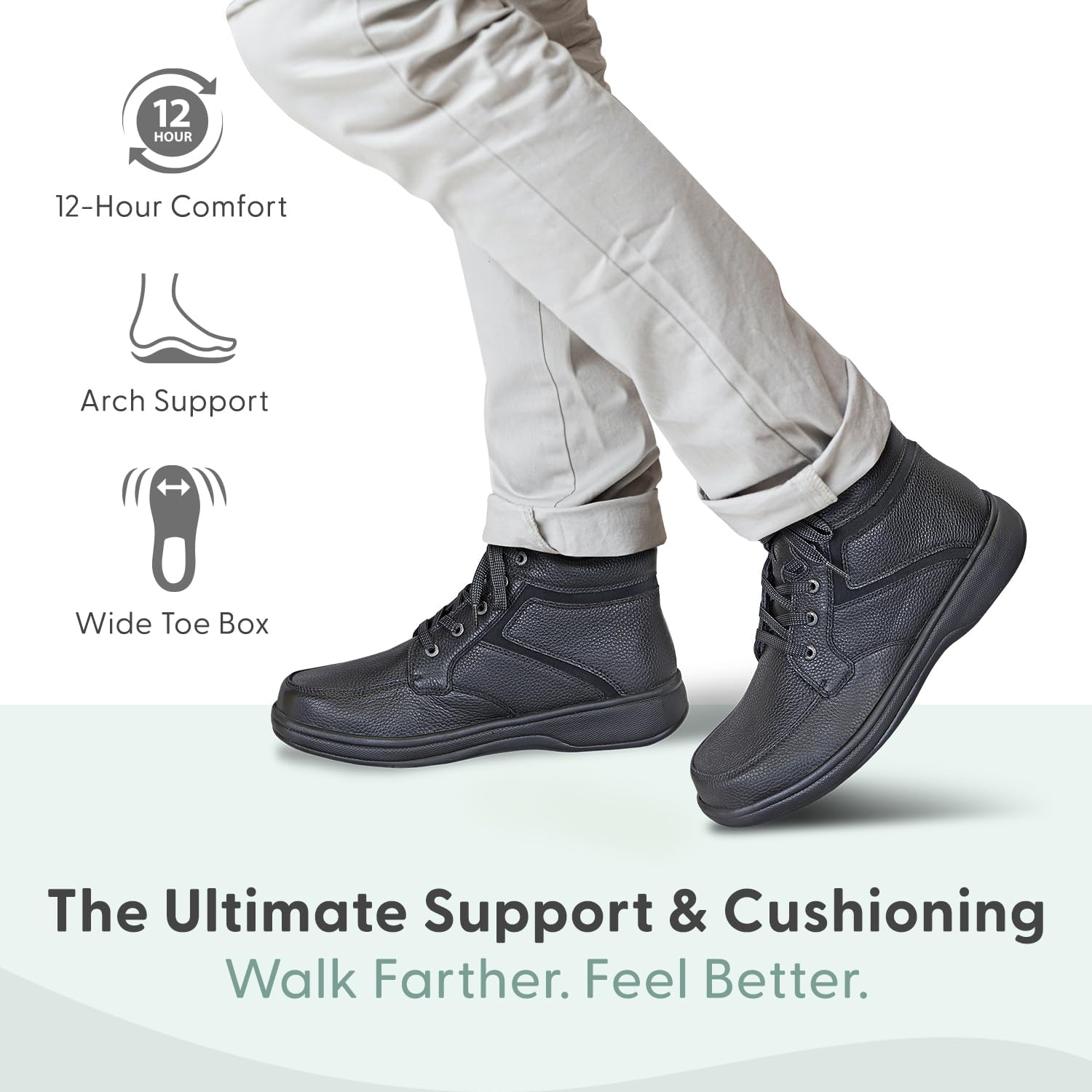
Diabetic neuropathy and post-surgical recovery. This is the clearest use case. Per the American Podiatric Medical Association’s consumer guide on orthopedic footwear, individuals with diabetic foot complications require seamless interiors, non-binding uppers, and pressure-distributing soles that minimize shear force on vulnerable skin. Orthofeet’s therapeutic lines are engineered to those tolerances; FitVille is not. If your podiatrist has recommended therapeutic footwear — or if Medicare coverage is in play — the clinical construction difference is real, and the price premium is functionally erased by coverage.
Bunions with moderate-to-severe deformity. The extra-depth last matters here. Owners across Orthofeet’s community forums consistently report that competing wide-toe-box shoes at lower price points still create lateral pressure on the bunion joint — because width alone isn’t the same as depth. The 3D shape of the last has to accommodate upward as well as sideways foot spread. Verywell Health’s 2025 plantar fasciitis shoe roundup, “Best Shoes for Plantar Fasciitis,” notes Orthofeet repeatedly in the context of structural foot conditions precisely because of this last construction.
Plantar fasciitis that hasn’t responded to cheaper interventions. If you’ve already gone through the $25 insole phase and the $50 wide-toe-box shoe phase without relief, the integrated arch and heel-cushion system in Orthofeet’s orthotic insole is a meaningful step up, not just a repackaging of what you’ve already tried. Consumer Reports’ walking shoe buying guide groups Orthofeet in a tier where insole geometry is substantively different from foam-only competitors.
You need the return safety net. Therapeutic footwear fit is notoriously hard to assess in a single wear. Orthofeet’s 60-day worn-shoe return policy — a genuine rarity in this price tier — means you can break the shoe in fully before committing. FitVille’s 30-day unworn policy is a harder constraint; if you’re managing a condition that makes shoe-shopping trial-and-error, that policy gap matters.
Orthofeet
$119.99
In stock on Amazon
Check price on AmazonThe Width and Last Compatibility Check You Should Do First
Before the brand question, answer the fit question — because a poorly fitted $150 shoe delivers worse outcomes than a well-fitted $45 one, and this is the most overlooked variable in premium orthopedic buying.
Both Orthofeet and FitVille offer multiple width options, but their sizing systems aren’t equivalent in feel. Owners of Orthofeet’s walking sneakers consistently report that the extra-wide (4E) fits closer to a traditional wide (2E) in terms of toe-box height, while FitVille’s extra-wide runs with more generous vertical clearance. If you’re dealing with a high instep (the arch of your foot that faces up) alongside width concerns, that distinction changes the comparison entirely.
Practical steps before committing to either:
- Measure both length and width — not just your standard shoe size. Many buyers in this category are a half-size shorter than they think but a full width wider.
- Check insole stackability. If you use custom orthotics, confirm the shoe’s insole removes cleanly and that the footbed depth can accommodate your orthotic’s profile without pushing your foot too high in the collar (the padded rim at the ankle opening).
- Read the return policy before you add to cart. With Orthofeet, you can test the shoe with real use. With FitVille, you need to get the fit right before your first walk, which is a harder ask for buyers managing complex conditions.
If You’re Buying for Someone Else
Caregiver and gift-buyer note: If you’re researching orthopedic shoes for an elderly parent, a post-surgical partner, or an athlete managing a chronic foot condition, the most important thing you can do is ask one question before choosing a brand: Has a podiatrist or physician recommended therapeutic footwear, or are we self-selecting into this category?
If there’s a clinical recommendation in play — especially for diabetic foot care — go Orthofeet and confirm which styles are Medicare A5500-eligible before purchasing. The paperwork is worth it. If you’re buying as a comfort upgrade for someone who just has tired, wide feet, FitVille is a generous, low-risk gift that won’t require a clinical conversation to appreciate.
The Decision Rule
If you’ve made it this far, you probably already know which way you’re leaning. Here’s the explicit decision frame:
If X → then Y:
-
If you’re managing a medically documented foot condition (diabetic neuropathy, post-surgical recovery, moderate-to-severe bunion deformity, or chronic plantar fasciitis that hasn’t responded to first-line interventions) → buy Orthofeet, confirm Medicare eligibility, and use the 60-day return window without guilt.
-
If your primary need is width accommodation and you already own or plan to buy quality aftermarket orthotics → buy FitVille, invest the $60–$80 savings in a Superfeet or Powerstep insert, and reassess at 90 days.
-
If you’re unsure and this is your first serious orthopedic shoe purchase → start with FitVille as a learning pair. The lower financial commitment gives you permission to experiment with fit, insole stacking, and break-in time before deciding whether the full Orthofeet investment is warranted.
-
If you’re buying for someone with diabetic foot risk and even partial Medicare coverage → the premium is already discounted. Orthofeet, no comparison.
The $120–$155 price tag on Orthofeet is justifiable — but only in the right context. The value isn’t in the brand name; it’s in the clinical-grade construction, the return safety net, and the therapeutic certification that cheaper competitors genuinely can’t replicate. Know your scenario, name your tradeoffs, and buy accordingly.