May 16, 2026 • Kevin Brooks • 10 min reading time • Prices verified June 25, 2026
Orthopedic Walking Shoes for Diabetic and Swollen Feet: Adjustable Closures, Zero-Drop, and What to Avoid
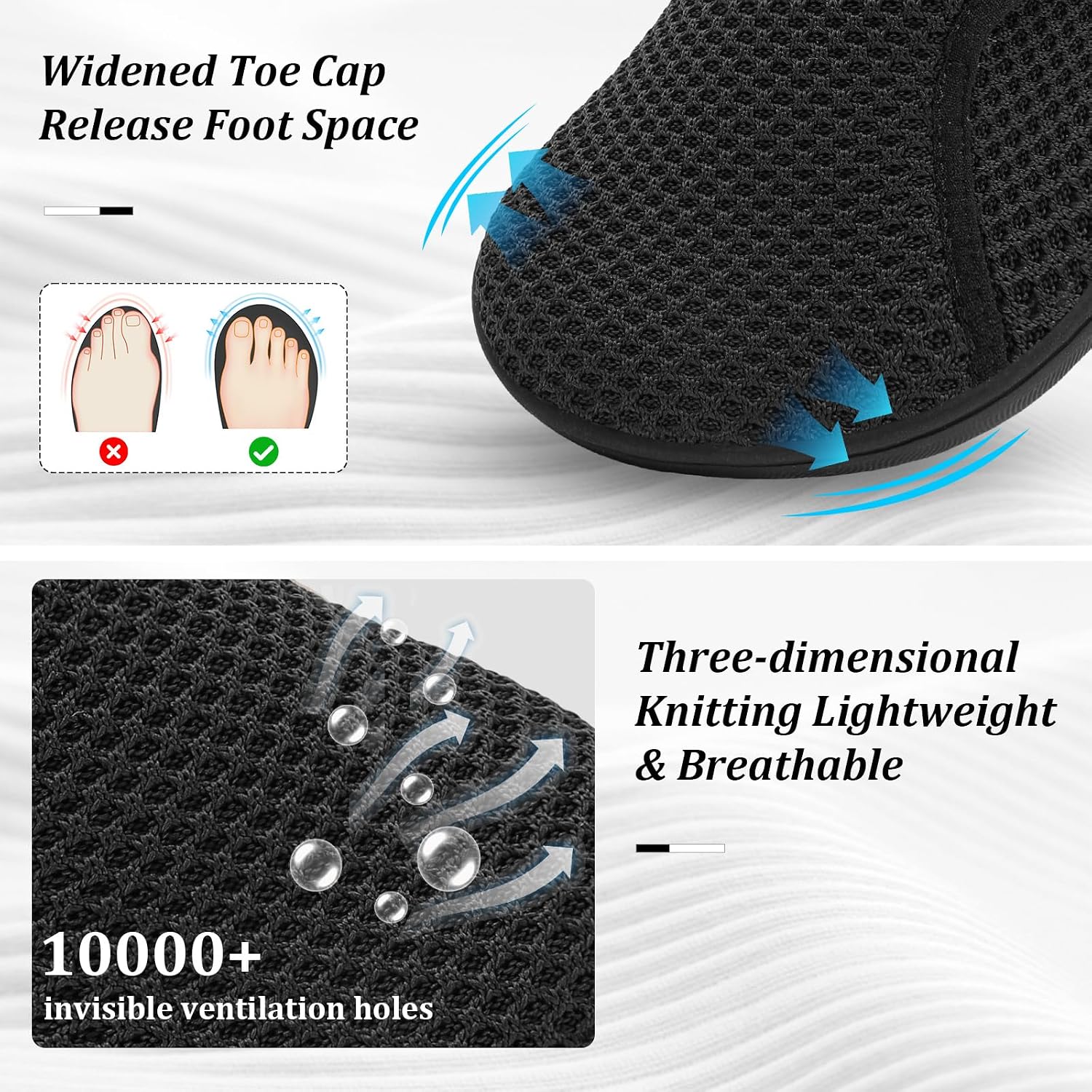
If you’ve ever watched a foot swell over the course of a single afternoon — or had a podiatrist tell you that an ordinary shoe is now a liability — you already understand why this topic matters. Diabetic neuropathy (nerve damage caused by long-term high blood sugar, which reduces your ability to feel pressure or friction on your feet) and edema (persistent swelling caused by fluid buildup, often linked to diabetes, heart conditions, or post-surgical recovery) create a very specific set of footwear needs. A shoe that’s “fine” for a healthy foot can cause pressure sores, blisters, or worse when sensation is reduced or foot volume fluctuates. This guide is written for the person who already knows the stakes — maybe you’re comparing a few finalist pairs, evaluating a podiatrist’s recommendation against something you found on your own, or trying to decide whether an extra-depth orthopedic shoe is genuinely necessary. We’ll name the tradeoffs, show the relevant numbers, and give you clear decision rules at the end.
| EDITOR'S PICK[FitVille Diabetic Shoes for Men](https://www.amazon.com/dp/B0CFXDL1KX?tag=greenflower20-20)… | Mid-tierFitVille Diabetic Shoes for Men… | Budget pickWomens Walking Shoes Comfortabl… | |
|---|---|---|---|
| Closure type | EasyTop Wings | Adjustable Closure | Adjustable |
| Width | XX-Wide | XX-Wide | Wide |
| Drop | — | — | Zero Drop |
| Intended use | Diabetic, Swollen Feet, Neuropathy | Diabetic, Swollen Feet, Therapeutic | Diabetic, Edema, Neuropathy, Nursing |
| Gender | Men | Men | Women |
| Breathable | — | — | ✓ |
| Price | $48.92 | $47.40 | $20.64 |
| See on Amazon → | See on Amazon → | See on Amazon → |
What the Specs Actually Mean for Diabetic and Edema Feet
Let’s translate the numbers that matter, because they’re not interchangeable.
Extra depth is the most important construction feature for diabetic footwear. A standard shoe last (the mold a shoe is built around) is designed for a foot that isn’t wearing a custom orthotic and isn’t significantly swollen. Extra-depth shoes add between 3/8 inch and 5/8 inch of vertical interior space. That headroom serves two functions: it accommodates a custom AFO (ankle-foot orthosis) or thick diabetic insole, and it dramatically reduces the chance that the toe box roof presses against the tops of bent toes — a common pressure-point injury in neuropathic feet that the wearer may not feel until a wound has already formed. Per Podiatry Today’s footwear considerations overview, extra-depth construction is the single most consistently recommended feature in clinical diabetic footwear guidelines.
Zero-drop vs. low-drop refers to the height difference between the heel and the ball of the foot inside the shoe. A traditional athletic shoe has 8–12mm of heel elevation (the heel sits noticeably higher than the toe). Zero-drop means both ends sit at the same level — essentially flat, the way the foot is positioned barefoot. For diabetic and edema patients, this distinction matters because elevated heels shift pressure forward onto the metatarsal heads (the ball of the foot), an area already prone to ulceration in neuropathic feet. The American Diabetes Association’s 2025 Standards of Medical Care explicitly flags forefoot pressure concentration as a primary ulcer risk factor. Zero-drop or very low-drop (under 4mm) keeps pressure more evenly distributed across the entire plantar surface.
Stack height is simply how much material sits between the bottom of your foot and the ground. Higher stack = more cushioning and more impact absorption. For someone with reduced sensation, high stack height is generally beneficial — it acts as a buffer against surface irregularities the wearer can’t feel. The tradeoff: very high stack height can reduce proprioception (your body’s sense of where the foot is in space), which matters for fall-risk patients. Most podiatrist-recommended diabetic shoes land in the 20–30mm stack range, which balances cushion with stability.
Width and last compatibility is where most buyers get burned. Edema means your foot volume changes during the day — often dramatically. A shoe that fits at 9 a.m. may be genuinely tight by 3 p.m. This is why adjustable closures aren’t a nice-to-have; they’re a safety feature. More on that in the next section.
Adjustable Closures: The Feature That Does the Most Work
Here’s the tradeoff most guides don’t name explicitly: a Velcro or BOA closure isn’t just about ease of use. It’s about the ability to re-fit the shoe mid-day without removing and re-lacing.
Hook-and-loop (Velcro) straps are the clinical gold standard for diabetic footwear for several reasons. They accommodate volume changes in real time, they don’t require fine motor dexterity that neuropathy or arthritis may have reduced, and they’re easy for caregivers to adjust. The limitation: most hook-and-loop shoes in the $80–$150 range use a single strap across the instep, which doesn’t give you granular tension control. Brands like Drew Shoe and Apis (both Medicare-certified diabetic shoe manufacturers) use two- and three-strap systems that distribute closure pressure more evenly — important when you need to loosen the forefoot while maintaining heel lockdown.
BOA dial systems (the small wire-and-dial mechanism originally developed for ski boots) give you micro-adjustable tension in a single twist. Reviewers on specialized diabetic footwear forums consistently report that BOA works well for moderate edema but becomes less practical for severe daily swelling — the system doesn’t open wide enough to accommodate a foot that has changed a full width size. Healthline’s edema overview notes that lower-extremity swelling in cardiac or renal patients can increase foot volume by as much as 15–20% from morning to evening.
Traditional laces with wide toe boxes can work for mild edema, but they require the wearer to loosen the entire shoe to accommodate swelling, which introduces trip risk if laces are left partially undone. If the person you’re buying for has neuropathy alongside edema, laces introduce an additional injury vector: they can create localized pressure points that go unfelt.
The decision rule here: If swelling is moderate to severe (visible pitting edema, regular 1+ width size fluctuation during the day), prioritize a multi-strap hook-and-loop or rocker-bottom shoe with a wide opening. If swelling is mild and predictable (slight puffiness by evening, generally consistent sizing), a BOA or wide laced shoe is a reasonable option.
By the Numbers
| Feature | Why It Matters | Minimum Threshold to Look For |
|---|---|---|
| Extra depth | Clears toes and fits orthotics | 3/8” (standard extra-depth) |
| Toe box width | Prevents pressure on bunions/hammertoes | 4E or wider for significant edema |
| Heel drop | Reduces forefoot pressure concentration | Under 8mm; ideally 0–4mm |
| Stack height | Cushions against unfelt pressure | 20–30mm underfoot |
| Interior seam construction | Eliminates friction hotspots | Seamless or padded interior lining |
What to Avoid (and Why These Features Are More Common Than You’d Think)
Pointed or tapered toe boxes. This seems obvious, but a surprising number of “comfort” shoes — including some labeled orthopedic — still narrow toward the toe. Verywell Health’s diabetic shoe roundup specifically calls out tapered toe boxes as a primary source of lateral toe pressure in neuropathic patients. If you can’t see the shoe’s interior width clearly from a top-down view, check the last designation: D (medium) is not appropriate for most edema feet; 2E through 6E is the relevant range.
Rigid heel counters with no adjustability. A heel counter is the stiff structural piece that cups the back of your heel. A firm, non-flexible heel counter is good for stability — but if the shoe can’t open wide enough for the foot to enter without bending the counter, you’re looking at a shoe that will be fought with rather than worn. Owners of extra-depth shoes consistently flag “getting the foot in” as the primary daily friction point; look for a low back opening or a full-length tongue gusset (an attached flap that lets the shoe open like a clamshell rather than requiring you to push the foot in).
Memory foam-only midsoles without a stability layer. Memory foam conforms to foot shape, which sounds ideal — but pure memory foam compresses fully under load and provides no rebound or lateral stability. For a foot with reduced sensation and balance challenges, an unstable midsole is a fall risk. The better construction pairs a firm EVA (ethylene-vinyl acetate foam) base for structure with a softer top layer for pressure distribution. Per Podiatry Today’s footwear overview, dual-density midsoles are considered best practice in therapeutic footwear precisely because they address both pressure diffusion and gait stability simultaneously.
Slip-on styles without heel retention. Slip-ons are tempting for ease of use, but without some form of heel retention (a strap, a contoured heel cup, or a fitted back), the foot tends to slide forward on each step — concentrating pressure on the toes. For diabetic feet, this mechanism is responsible for a disproportionate share of toe tip abrasions. If the patient genuinely cannot manage a closure system, a slip-on with an elastic heel gore (a flexible panel across the back) is a meaningful improvement over a fully open back.
Price-to-Value: Is the $300+ Tier Worth It?
The honest answer is: it depends on what the alternative actually is.
A $65 wide-width New Balance 928 is a legitimate, podiatrist-recommended shoe — it’s extra-depth, seamless-lined, and has a removable insole. For mild neuropathy with no significant edema, it’s a sensible starting point. Verywell Health consistently includes it in diabetic shoe roundups.
The jump to $250–$400 (Finn Comfort, Drew Shoe, Orthofeet’s upper tier, Aetrex) buys you significantly more: true multi-width last construction (rather than a single wide mold), more robust adjustability, and often Medicare HCPCS coding (A5500 series) that makes them eligible for insurance reimbursement under diabetic footwear benefits. The American Diabetes Association notes that Medicare covers one pair of depth-inlay shoes and three pairs of inserts per calendar year for qualifying diabetic patients — a benefit that offsets the sticker price entirely when used. That changes the math substantially: a $350 shoe that bills at $0 out-of-pocket is a different value proposition than its retail price suggests.
The $400–$600 custom-molded territory (Signature Sols, PW Minor, full custom orthotics) is appropriate when off-the-shelf extra-depth shoes have failed to resolve pressure points or when foot anatomy has been significantly altered by surgery or severe deformity. This tier is a podiatrist-directed purchase, not an editorial one.
If You’re Buying for Someone Else
Caregiver callout: If you’re shopping for a parent or patient rather than yourself, the three things that matter most are: (1) accurate foot measurements taken in the afternoon when swelling is at its peak, (2) confirmation of whether Medicare diabetic shoe benefits apply — a quick call to the podiatrist’s office can clarify eligibility, and (3) a return policy that allows an exchange after a home fitting. Many therapeutic footwear brands, including Orthofeet and Apis, offer 30–60 day comfort guarantees specifically because fit can’t be fully verified in a store. Surface this before you buy.
The Decision Framework
If your primary issue is moderate to severe daily edema with intact sensation: prioritize multi-strap hook-and-loop closure, 4E+ width, and a shoe with a wide opening. Extra-depth construction is beneficial but not as critical as volume accommodation.
If your primary issue is diabetic neuropathy with reduced sensation and relatively stable foot volume: extra-depth construction, seamless interior lining, and zero- or low-drop are your non-negotiables. Width matters, but a precise fit (rather than “go wide”) is achievable.
If you’re managing both neuropathy and significant edema: you’re in the clinical footwear tier. The combination of reduced sensation and unpredictable volume means a custom-molded or multi-width extra-depth shoe with multi-strap adjustability is the appropriate starting point — and the Medicare benefit likely applies. Start with your podiatrist’s recommendation, then confirm the return policy before final purchase.
The right shoe here isn’t about brand prestige or aesthetic preference — it’s about matching a specific construction to a specific set of risks. Once you know which risks you’re managing, the decision narrows quickly.