June 3, 2026 • Kevin Brooks • 9 min reading time • Prices verified June 25, 2026
Recovery Sandal Stack Height vs. Price: What You're Actually Paying For
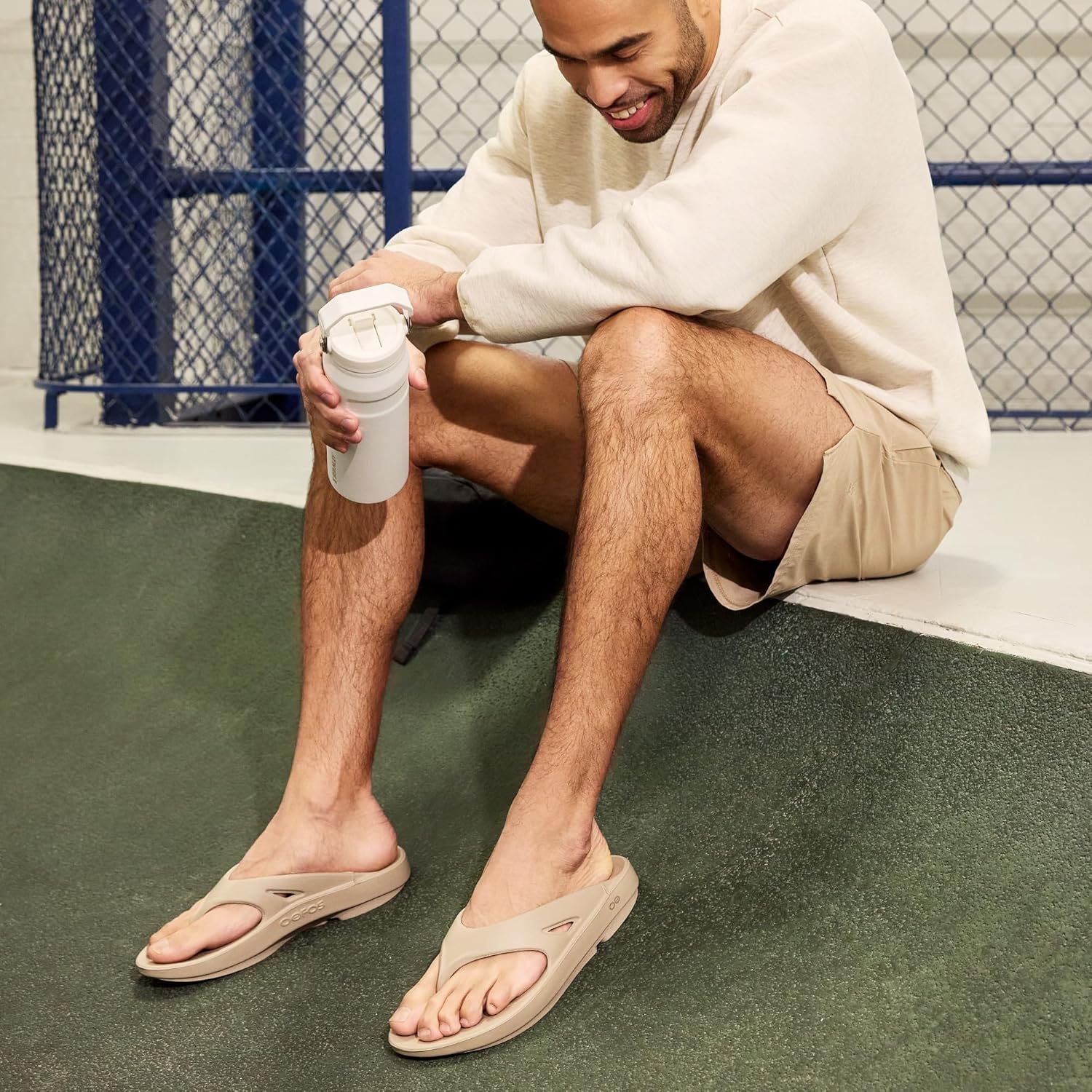
If you’ve ever stood in a sporting goods aisle holding two pairs of recovery sandals — one priced at $35, one at $185 — and wondered what, exactly, you’re paying for, you’re not alone. Recovery sandals are footwear designed specifically for after the hard stuff: the post-run shuffle to your car, the morning walk to the kitchen when your heels feel like cracked glass, the hours of standing at a desk that your feet never quite forgave you for. The core idea is that the sole — the layer of foam between your foot and the floor — is thick and engineered enough to absorb impact and reduce the load your muscles, tendons, and joints have to manage. That thickness is called stack height (measured in millimeters from ground to footbed), and it’s the single most debated spec in this category. This guide breaks down what different stack heights actually deliver, where the price-to-value math makes sense, and how to match both to your specific situation.
Stack Height 101: The Number That Actually Drives the Experience
Stack height in recovery sandals typically runs from about 20mm on the low end to 40mm+ at the top of the category. To put that in physical terms: a standard flip-flop sits around 10–12mm. A 30mm stack height is roughly the thickness of a hardcover novel’s spine under your arch. A 40mm stack feels noticeably elevated — some wearers describe it as “walking on a mattress edge” when they first try it.
Why does this matter? Thicker foam midsoles can meaningfully reduce ground reaction force — the upward jolt your body absorbs with every step. According to Podiatry Today’s clinical reporting on foam density and foot orthotic outcomes, this reduction in impact load translates to less strain on the plantar fascia (the thick band of tissue running along the bottom of your foot, whose inflammation causes plantar fasciitis), less Achilles tension, and reduced fatigue in the calves and lower back after long standing periods.
But here’s the tradeoff most product pages won’t tell you: more stack height is not always better for every foot type.
- 20–25mm stack: Better proprioception (your foot’s ability to sense ground position), more stable on uneven surfaces, less “tippy” feeling for people with balance concerns. Typically EVA foam or basic polyurethane. Works well for light recovery and everyday wear.
- 28–34mm stack: The sweet spot for most recovery use cases. Enough cushion to meaningfully reduce impact, still stable enough for a brisk walk or errand run. This is where most of the volume in the $80–$160 price tier lives.
- 35–42mm stack: Maximum-cushion territory. Designed for post-workout recovery and for people with chronic heel pain, neuropathy, or post-surgical sensitivity. Some stability is sacrificed at this height; a contoured footbed or arch support is needed to compensate.
The Price Tiers, Broken Down Honestly
Here’s the real comparison most buyers need, laid out without softening. Each tier below represents a meaningfully different product — not just a price increment.
Budget Tier: $25–$60 — Entry-Level Stack
You’re almost always getting a single-density EVA foam sole — EVA (ethylene-vinyl acetate) is lightweight and cheap to mold, which is why it’s everywhere. Published specs across this tier show stack heights of 18–24mm. The foam compresses quickly under repeated use; owner feedback consistently notes that cushioning “flattens out” noticeably around the 3–4 month mark with daily wear.
If you’re buying these for occasional post-workout use, light beach days, or to test whether a recovery sandal format even works for your feet before committing, this tier is legitimate. If you’re managing plantar fasciitis daily or spending 6+ hours on your feet, you’ll likely outgrow them in one season — and the cost-per-use math starts to flip.
By the numbers:
- Average stack height at this tier: ~20mm
- Estimated foam life under daily use: ~90–120 days before measurable compression loss
- Effective cost-per-day at $40 / 100 days: ~$0.40/day
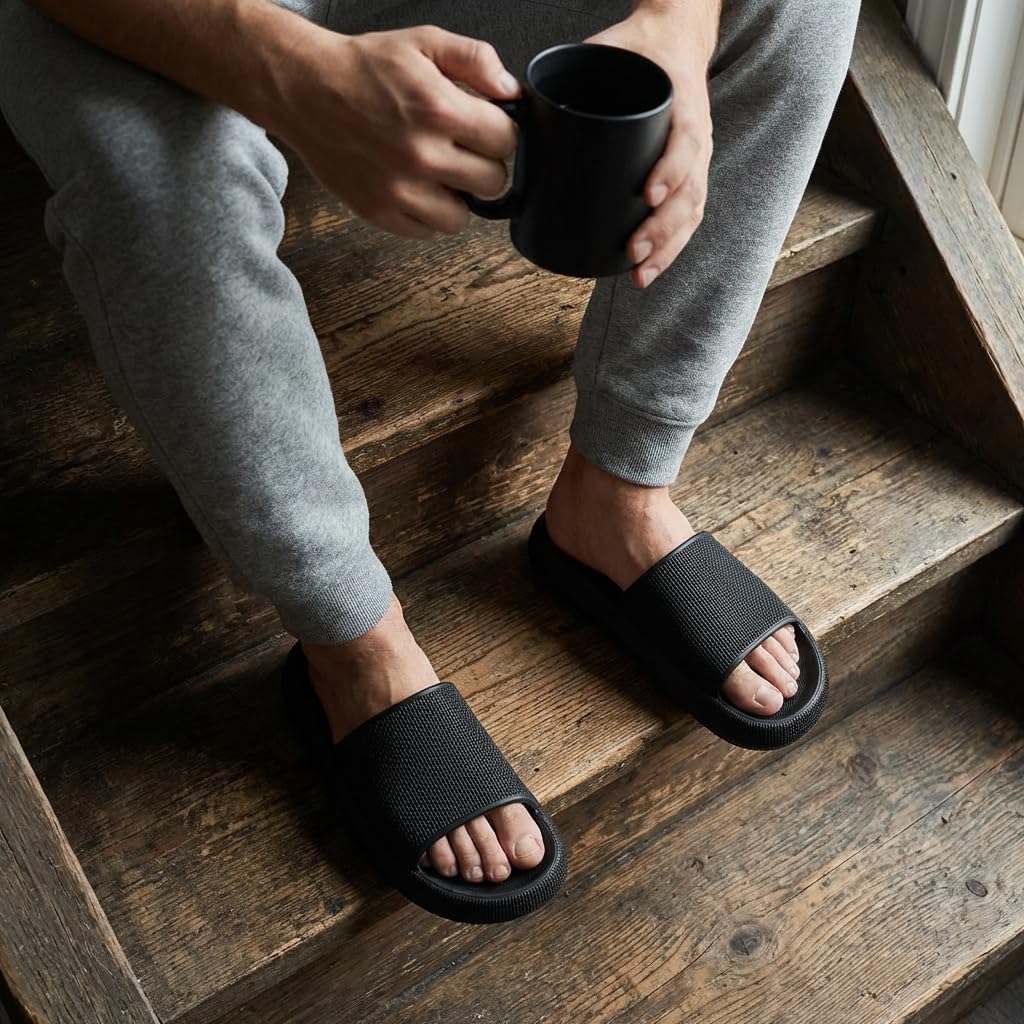
CUSHIONAIRE
$28.48
In stock on Amazon
Check price on AmazonMid-Tier: $80–$160 — Where Engineering Actually Enters
This is the most contested tier, and where the value density is highest for most buyers. Brands like Oofos, Hoka (Ora Recovery Slide), and Teva (Hurricane XLT2 Mush) compete here with purpose-formulated foam compounds rather than commodity EVA.
Oofos, for example, uses their proprietary OOfoam material, which the brand’s published specifications cite as absorbing 37% more impact than standard EVA. Runner’s World, in their annual best recovery shoes feature, consistently names the Oofos OOahh and OOmg models as top performers for post-run recovery, citing owner reports of reduced heel and arch soreness versus prior footwear. The Hoka Ora Recovery Slide publishes a 30mm stack height with a dual-density construction — a softer top layer for comfort, firmer base for rebound. Outside Online’s feature “Do Recovery Shoes Actually Work?” notes that the biomechanical case is strongest for foam formulations with high energy return (meaning the foam springs back rather than simply compressing), which is more common in this tier than the one below it.
For anyone managing plantar fasciitis, the Mayo Clinic’s guidance on plantar fasciitis diagnosis and treatment emphasizes reducing strain on the plantar fascia throughout the day — not just during activity. A mid-tier recovery sandal worn as a house shoe and errand shoe can be part of a conservative treatment protocol, though the Mayo Clinic recommends working with a podiatrist for persistent cases.
By the numbers:
- Average stack height at this tier: 28–32mm
- Foam formulation: purpose-built compound (OOfoam, EVA+, CMEVA)
- Effective cost-per-day at $130 / 300 days: ~$0.43/day
The cost-per-use math reveals something important: at daily use, mid-tier sandals are often cheaper per day than entry-level options that wear out in a season. That’s the core argument for the upgrade.
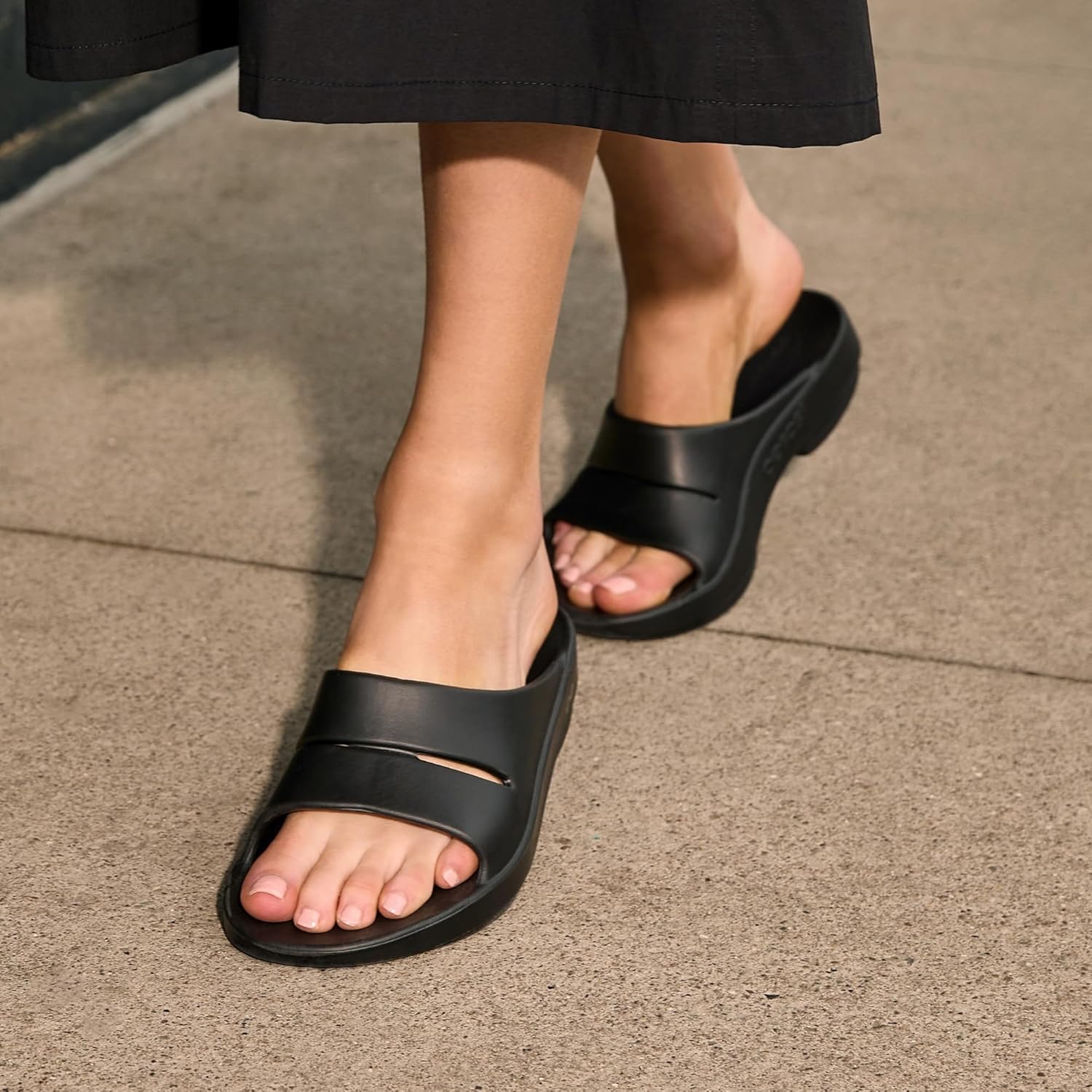
OOFOS
$57.80
In stock on Amazon
Check price on AmazonPremium Tier: $180–$300 — Paying for Structure, Not Just Foam
At this price point, you’re no longer just buying thicker foam. You’re buying a system: arch support integrated into the footbed, a contoured last (the internal shape the shoe is built around), and in some cases, an orthotic-ready design that works with custom inserts.
Brands like Birkenstock (Arizona Soft Footbed), Vionic, and Dansko operate in this zone. The Birkenstock Arizona Soft Footbed uses their cork-latex footbed with an additional cushioning layer — the stack isn’t dramatically higher than mid-tier, but the arch support profile is engineered to position the foot in a neutral alignment that reduces pronation (inward rolling) strain. Verywell Health’s overview of plantar fasciitis notes that arch support and foot alignment correction are both evidence-supported interventions for reducing fascia tension, making structural support at this tier relevant beyond simple comfort.
Owners of premium recovery sandals consistently report a different kind of relief than pure cushion provides — less the “sinking into foam” sensation and more a feeling that their foot is being held correctly. For people with moderate-to-severe pronation, bunions, or post-surgical sensitivity, that structural support is often worth more than raw stack height.
Key tradeoff: Premium recovery sandals tend to have a break-in period. The cork-latex footbed of a Birkenstock molds to your foot over 2–3 weeks; early days can feel noticeably firm. If you’re in acute pain, this isn’t always the right first move — mid-tier cushioned options may provide faster initial relief while you build toward a structural solution.
By the numbers:
- Average stack height at this tier: 24–32mm (support replaces raw height)
- Footbed construction: contoured cork-latex, molded arch support, orthotic-compatible
- Expected usable life: 3–5 years with seasonal wear
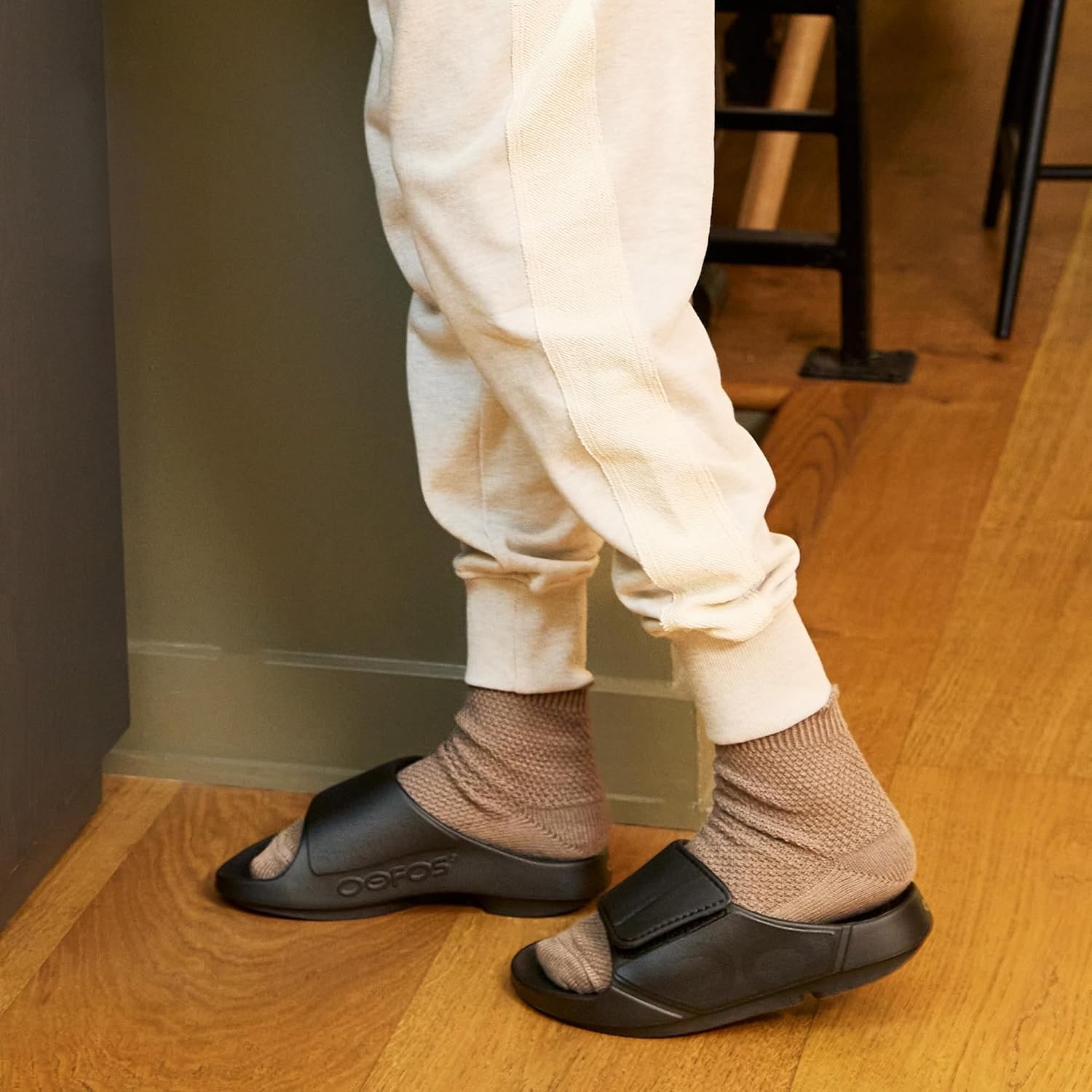
OOFOS
$79.95
In stock on Amazon
Check price on AmazonWidth, Last, and the Fit Variables That Matter as Much as Stack
Stack height gets all the marketing attention, but experienced buyers know fit is where most recovery sandals fail people.
Recovery sandals with generous stack heights can feel unstable if the footbed is too narrow for your foot — your weight shifts to the edges, and you’re actually increasing lateral stress on the ankle. Brands vary significantly in their default width assumptions. Oofos runs slightly wide, which owners with wider feet consistently praise. Hoka’s Ora Slide runs true-to-size but not especially wide; people with wide feet report needing to size up. Birkenstock explicitly offers both narrow and regular widths, which is part of why podiatrists frequently recommend them — you can match the last to your actual foot shape rather than approximating.
Healthline’s general guidance on inflammation and recovery emphasizes that improper footwear fit can itself become a source of inflammation — a well-cushioned sandal that fits poorly can create new pressure points that offset the benefits of the foam. Getting width right matters.
If you’re buying for someone else: Width is the variable most gift-buyers get wrong. If you don’t know the recipient’s foot width, a brand that explicitly sizes for wide and narrow — Birkenstock and Vionic both do — gives you a better chance of a comfortable fit. Alternatively, look for sandals with adjustable straps; more strap adjustment range means more fit forgiveness across a wider range of foot shapes.
The Decision Rule: Matching Tier to Problem
If you’ve read this far, you’re probably sitting with a real choice. Here’s the framework, stated plainly.
Light post-workout recovery or testing the category: Entry-to-mid tier ($35–$100) is the right call. Don’t over-invest before you know how you’ll use them. Basic EVA cushion is sufficient for occasional use, and if the format doesn’t suit you, you haven’t lost a significant investment.
Plantar fasciitis, chronic heel pain, or 6+ hours daily on your feet: The mid-tier ($100–$160) foam formulations — OOfoam, compression-molded EVA, dual-density constructions — are meaningfully different from commodity single-density foam. The cost-per-use math supports this tier for daily wearers, and the clinical case for high-energy-return foam is stronger than for basic cushion. Runner’s World and Outside Online both consistently place models in this tier at the top of recovery-specific rankings for exactly this reason.
Podiatrist-flagged alignment issues, pronation, or post-surgical recovery: The premium tier ($180–$300) is where structural support enters the equation. Stack height alone won’t solve an alignment problem; you need the contoured footbed. Allow for the break-in period, and if you’re managing a medical condition, work with your care team before selecting a specific model. The Mayo Clinic’s plantar fasciitis treatment guidance explicitly notes that conservative care works best when it addresses both cushioning and alignment — premium-tier sandals are the only price tier where both are engineered together.
Diabetic neuropathy or extreme pressure sensitivity: This use case maps to extra-depth orthopedic brands — Drew Shoe, Apex — that are designed specifically for high-risk foot conditions. Stack height specs at these brands typically run 20–28mm, not the thickest available, but the last construction and materials prioritize pressure distribution and protection over raw cushion. Podiatry Today’s clinical reporting on orthotic outcomes supports this approach: for neuropathic feet, a well-fitted protective structure matters more than maximum foam thickness.
The honest summary: you’re not paying for stack height alone. You’re paying for the foam compound, the footbed structure, the width options, and the durability of the system. At $35, you’re getting cushion. At $150, you’re getting engineered recovery. At $250, you’re getting alignment support. Know which problem you’re actually solving, and the price-to-value equation mostly takes care of itself.